STATE
/
Thu, Oct 8, 2026 05:06 PM
Mandeep Kaur presides over first ever BWG convention; says every generator must own its waste
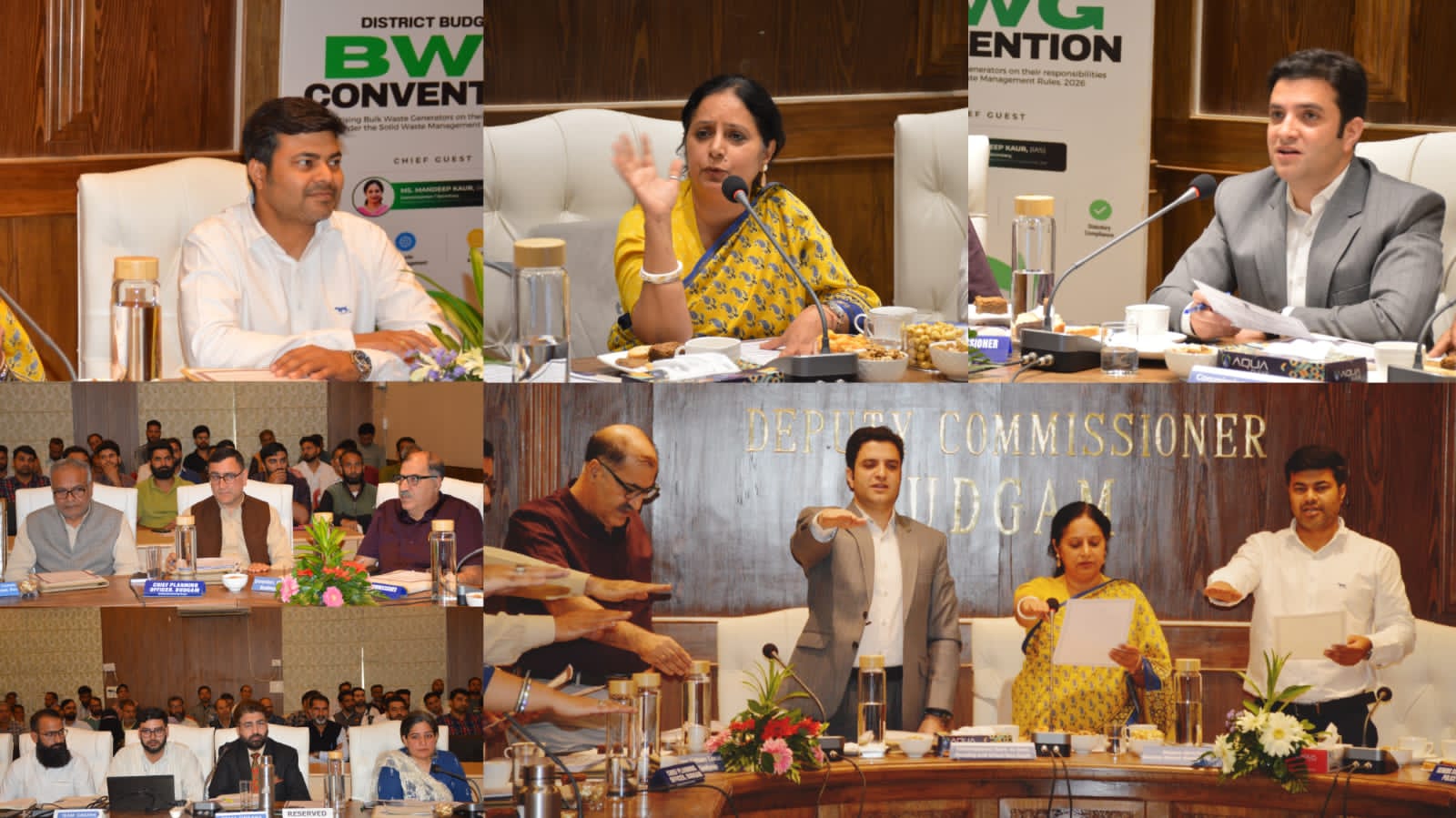
BUDGAM, OCTOBER 08: A convention for Bulk Waste Generators (BWGs) was today organised by district administration Budgam with the objective of sensitising the business establishments, institutions and other bulk waste generators about their responsibilities under Solid Waste Management Rules and promoting scientific and responsible waste management.
Commissioner Secretary, Housing & Urban Development Department, Mandeep Kaur who presided over the first of its kind convention said that all business establishments and other Bulk Waste Generators have to take responsibility for processing and managing the waste generated by them.
Addressing the gathering, Mandeep Kaur said that waste generators can adopt appropriate mechanisms such as on-site processing, home or institutional composting, or engaging authorised waste collectors or agencies for collection and disposal of waste. She said the practice of dumping waste outside commercial establishments after closure of markets has to change, emphasising that every waste generator must take responsibility for its own waste.
"Municipalities cannot be expected to take responsibility for the waste generated by every establishment," Commissioner Secretary said, adding that waste generators can engage private or municipal agencies for collection and management of their waste.
The Commissioner Secretary said similar conventions would be organised in every district to create awareness and strengthen implementation of waste management rules in both urban and rural areas. She said the committees constituted under the directions of the Supreme Court and the responsibilities entrusted to Deputy Commissioners would play an important role in ensuring effective enforcement.
Emphasising that public participation is crucial for achieving a clean environment, Mandeep Kaur said people are willing to contribute but systems need to be strengthened and responsibilities clearly assigned. She called upon the welfare associations, societies, organisations, business associations and other stakeholders to establish and implement effective systems for management of the waste generated by them, describing it as an important step forward in the Swachh Bharat journey.
The Commissioner Secretary also urged the local youth to become Swachhta entrepreneurs and create avenues of economic opportunity for themselves and others while contributing towards cleanliness and sanitation.
Earlier, Deputy Commissioner Budgam, Athar Aamar highlighted the importance of strengthening institutional capacity and fixing responsibility at every level. He stressed the need for active participation of PRIs and communities in fulfilling the objectives of Swachh Bharat Mission and safeguarding the environment. He also elaborated Budgam's rich natural heritage including Doodhpathri and Shaliganga.
Managing Director, SBM J&K, Dr. Devansh Yadav, gave a detailed introduction to Bulk Waste Generators and apprised the participants of applicable Solid Waste Management Rules and Supreme Court guidelines. He highlighted the provisions related to identification and coverage of BWGs, processing of waste, appropriate disposal and engagement of authorised waste management agencies.
Earlier, the participants were sensitised about registration through the CPCB portal, engagement of waste entrepreneurs and private vendors and opportunities under Waste to Wealth initiative.
Director, Urban Local Bodies, Kashmir, Dr. Fayaz Ahmad Banday sensitised participants about the role and responsibilities of every citizen in safeguarding fragile environment of Jammu & Kashmir.
A dedicated session on BWGs was conducted by SWAAHA, followed by demonstration of CPCB portal and registration process by SBM(U) PMU. An interactive Q&A session was also held to address queries of the participants.
On the occasion, the Commissioner Secretary administered Swachhta Pledge.
All district and sectoral officers, representatives from service sector, hotel industry, schools and other private institutions, restaurant owners, shopkeepers and other business holders attended the convention.
|